









Bioclear earth is conducting research into the soil microbiome of 193 forest locations in Drenthe

The Province of Drenthe has commissioned us to conduct a study into the health of the region's forests. The total forest area in Drenthe currently covers 37,323 hectares.

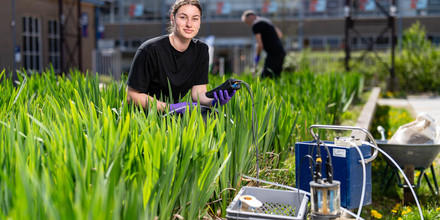
In collaboration with the Forest Groups and the B-Ware Research Centre, we have investigated 193 forest locations, examining the range of soils and vegetation, from dry and nutrient-poor to wet and nutrient-rich. This is the first time research into the health of forests in the Netherlands has been conducted in this way and on such a large scale.


Integrated approach: combining vegetation, soil chemistry and microbiome

To answer the question posed by the Province of Drenthe, we combined knowledge from three disciplines:

  • Vegetation and landscape history: the Forest Groups mapped the vegetation and landscape history. They examined whether the current vegetation matches what would typically be found in that type of forest. They also determined how many target species — those that are characteristic of the forest type under investigation — were present.
  • Soil chemistry: B-WARE analysed the soil chemistry (including pH, nitrogen, organic matter and buffer status) of different soil layers.
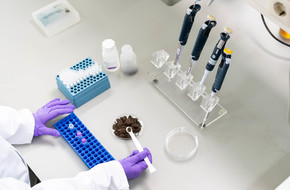
  • Microbiome: Bioclear Earth mapped all bacteria, archaea, and fungi, linking this data to the vegetation and soil chemistry data.


 

Answering questions by combining data

We were able to answer various questions by combining these datasets. One important question is whether there is a link between soil microbiology and above-ground species richness, since the latter is a reliable indicator of forest ecosystem health.

Our research showed that there is a positive correlation between high levels of above-ground diversity and greater microbial biodiversity.

Denitrifying bacteria: natural protection against eutrophication

There are striking differences in the presence of denitrifying bacteria. We found a higher proportion of these bacteria in forests with a greater variety of species. This is good news because they help remove excess nitrogen from the soil and offer natural protection against eutrophication. In the same soils, we also discovered a greater abundance of bacteria and fungi that promote plant growth.


Tools for the future:

Microbiology as an indicator of forest quality

This research represents an important step towards a new way of looking at forest health. The results show clear correlations between the soil microbiome, soil chemistry and vegetation. In addition to vegetation research and chemical analyses, microorganisms have the potential to serve as biological indicators of the ecological quality of forests.

The current dataset provides a solid foundation for the further development of these indicators. This can be achieved by collecting additional data from forests with different tree species and forests that have recently been planted on agricultural land, as well as by monitoring locations over a prolonged period.  This will provide insight into how soil microbiology changes in response to management, soil chemistry, and hydrological conditions.

Controlling acidification, eutrophication and nitrogen pollution

Our analyses indicate that denitrifying bacteria could be instrumental in mitigating the acidification and eutrophication of forest soils. In future research and pilot projects, we want to investigate these bacteria's role further. We also aim to explore how management measures, such as the application of organic soil improvers, can stimulate these microbial processes. This approach allows us to explore innovative ways to reduce nitrogen pollution and enhance soil quality and biodiversity.


If you would like to know more about this subject, please contact Eline Keuning and Jidske Knigge

Other projects

Are you interested in our methods and would like more information?

Please contact Eline Keuning.

Want to know how we can help you?

Let us inspire you